What Are the Best Puzzle Games Like Sokoban?
Sokoban has been challenging players to think several moves ahead since 1982, turning the simple act of pushing crates onto storage targets into one of gaming's most enduring genres. This article provides an overview of the best modern and classic block-pushing puzzle games inspired by Sokoban, highlighting how different developers have evolved the core formula with creative rules, recursive worlds, and clever level design.
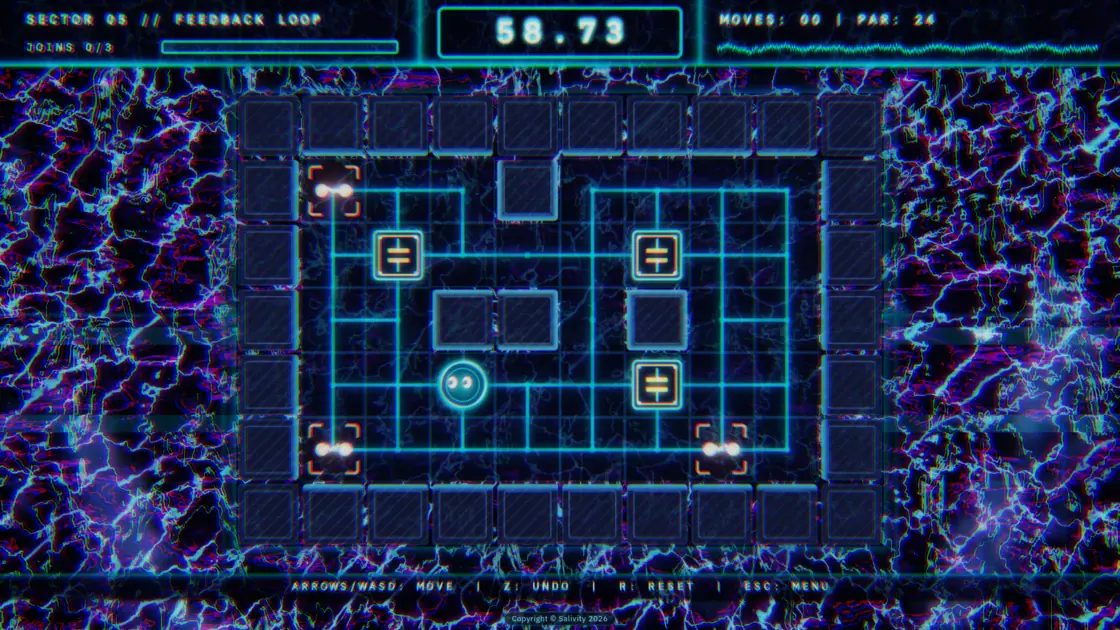
The beauty of the Sokoban formula lies in its strict constraints: you can push a block forward, never pull it, and a single careless push into a corner can lock a puzzle permanently. Because those core mechanics are so clean and accessible, fans still enjoy jumping into a browser-based Sokoban Clone for pure, distraction-free spatial problem-solving before diving into larger indie spin-offs that bend the rules in surprising ways.
Baba Is You
Baba Is You takes the traditional grid-based pushing mechanic and applies it to the rules of the game itself. In every level, words like "WALL," "IS," and "STOP" exist as physical blocks you can shove around the map. By pushing words together to form new sentences—such as turning walls into something you can pass through, or making a rock the object you control—the game transforms standard block-pushing into mind-bending lateral thinking.
Patrick's Parabox
If you enjoy the tight, logical elegance of classic warehouse puzzles, Patrick's Parabox adds a brilliant mathematical twist: recursion. Blocks in this game can contain entire rooms inside them, and you can push crates into or out of those miniature spaces. You might even push a box into itself or shrink down to move a room from within, creating deeply satisfying "aha" moments without ever losing the crisp, readable feel of Sokoban.
Stephen's Sausage Roll
Widely regarded as one of the toughest puzzle games ever made, Stephen's Sausage Roll replaces simple crates with sausages that must be rolled onto grill tiles without burning either side. You carry a fork that occupies an extra tile on the grid, which forces you to carefully plan how you rotate, navigate narrow ledges, and position each piece. Every level is compact, handcrafted, and teaches a subtle spatial trick without a single line of tutorial text.
A Monster's Expedition
For players who want a gentler, more atmospheric take on block pushing, A Monster's Expedition sets its puzzles across hundreds of interconnected islands. Instead of crates, you knock down trees and roll or push logs into the water to build makeshift bridges. Because the game is structured as an open world, you can easily sail away from a tricky island and return later with a fresh perspective, making it one of the most approachable entries in the genre.
Can of Wormholes
Can of Wormholes blends classic grid pushing with quirky, tactile physics. Playing as a tin can, you push, bend, and roll flexible worms onto matching targets across a large overworld of interconnected stages. Its standout feature is how cleanly it introduces new mechanics and combines them later, supported by a generous hint system that keeps frustration low while preserving the joy of discovery.
Chip's Challenge
Long before modern indie hits revitalized the genre, Chip's Challenge combined Sokoban-style block pushing with top-down adventure elements. Players push dirt blocks into water to create safe paths while collecting computer chips, dodging hazards, and grabbing elemental boots to traverse fire or ice. Its mix of strict spatial puzzles and light action-arcade pacing gave many players their very first taste of grid-based logic games.
What Makes a Great Sokoban-Style Game?
The strongest games in this genre share a few vital design traits. First, they respect the player's time with instant undo and restart controls, encouraging experimentation rather than punishing mistakes. Second, they rely on emergent complexity—using just two or three simple rules to generate dozens of distinct, memorable puzzles instead of overwhelming the player with clutter. Whether you prefer traditional crate pushing or surreal rule-bending twists, the Sokoban family remains one of the richest corners of puzzle gaming to explore.